
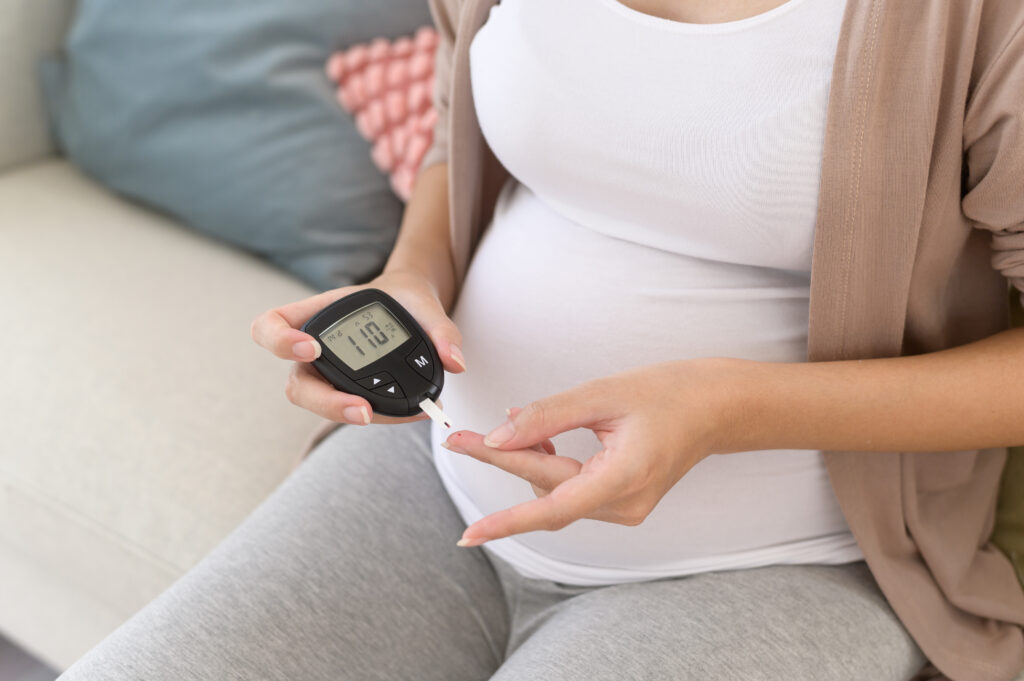
What is Gestational Diabetes?
Gestational diabetes is a type of diabetes that develops during pregnancy. It means your blood sugar levels become too high while you are expecting. Usually, this condition appears in the second or third trimester. However, it often goes away after the baby is born. Still, it is important to manage gestational diabetes to keep both mother and baby healthy. Many women have no symptoms, so regular screening is important. In some cases, gestational diabetes can lead to health problems for both mother and child if not treated.
Symptoms of Gestational Diabetes
Most women with gestational diabetes do not notice any symptoms. Even so, some may experience signs such as:
Because these symptoms can be mild, regular check-ups are important. Early detection helps prevent problems.
Causes and Risk Factors
Gestational diabetes happens when your body cannot make enough insulin during pregnancy. Insulin is a hormone that helps control blood sugar. During pregnancy, hormones can make it harder for insulin to work. As a result, blood sugar rises. Several factors can increase your risk, such as:
Knowing your risk can help you and your doctor plan for a healthy pregnancy.
Diagnosis and Screening
Doctors usually test for gestational diabetes between 24 and 28 weeks of pregnancy. However, if you have risk factors, your doctor may test earlier. The most common test is the glucose challenge test. In this test, you drink a sweet liquid, and your blood sugar is checked after one hour. If your levels are high, you may need a second test called the glucose tolerance test. Early diagnosis helps with pregnancy blood sugar management and reduces risks for you and your baby.
Treatment and Management
Managing gestational diabetes is important for your health and your baby’s health. Treatment often includes:
With proper care, most women with gestational diabetes have healthy pregnancies and babies. Your doctor will guide you on the best plan for gestational diabetes treatment.
Lifestyle Tips for Expectant Mothers
There are many ways to help manage gestational diabetes. For example, you can:
Additionally, always follow your doctor’s advice. These steps can help you feel better and protect your baby.
Prevention and Outlook
While you cannot always prevent gestational diabetes, you can lower your risk. For instance, maintaining a healthy weight before pregnancy helps. Eating well and staying active also make a difference. Most women with gestational diabetes have healthy babies, especially with good care. However, it is important to know that having gestational diabetes increases your risk of type 2 diabetes later. Therefore, regular check-ups after pregnancy are important for long-term health.
When to See a Doctor
If you are pregnant and have risk factors for gestational diabetes, talk to your doctor early. Also, if you notice symptoms like increased thirst or frequent urination, let your healthcare provider know. Early testing and treatment can help prevent problems. Remember, your doctor is your best resource for pregnancy blood sugar management and gestational diabetes care.
For personalized advice and care, consult your healthcare professional. They can help you manage gestational diabetes and support a healthy pregnancy.